
 The Larrikin Priest will be visiting Sunbury at Memorial Hall on Tuesday 25 March at 7.30pm. Fr Bob will discuss ‘Social Cohesion and Community’. Cost $10 with all proceeds going to the Maguire
Foundation by the Rotary Club of Sunbury. Bookings can be made through www.rotaryclubsunbury.org.au
FR BOB MAGUIRE
The Larrikin Priest will be visiting Sunbury at Memorial Hall on Tuesday 25 March at 7.30pm. Fr Bob will discuss ‘Social Cohesion and Community’. Cost $10 with all proceeds going to the Maguire
Foundation by the Rotary Club of Sunbury. Bookings can be made through www.rotaryclubsunbury.org.au
PETS ON THE GREEN
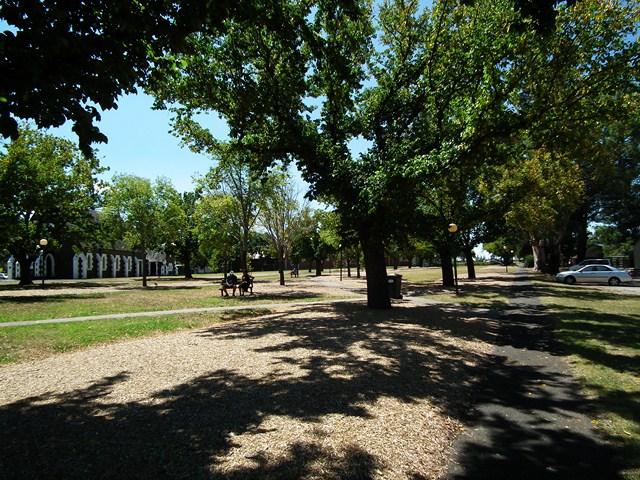 PETS ON THE GREEN
Pets on the Green will take place Sunday 16 March at 10.30am with the ministers of Sunbury’s Churches praying together and blessing our pets on the Village Green.
CATHOLIC STEWARDSHIP

CATHOLIC STEWARDSHIP FROM SUNDAYS READINGS
“This is the day the Lord has made; let us rejoice and be glad.” This refrain from Psalm 118 rings throughout the Church on this glorious Easter Sunday. His Holiness Pope Francis will echo that by proclaiming “He is risen!” from the balcony of St. Peter Basilica.
In today’s Gospel reading from John the empty tomb is described and emphasized. Although Peter and John, upon inspecting the tomb “saw and believed,” it was not the empty tomb that they began to proclaim throughout Judea and beyond, it was the Lord’s Resurrection.
That is the reason for our joy. For us as Catholics and Christians, this is the hope promised us by Christ. We are all familiar with that familiar phrase: “faith, hope, and love, but the greatest of these is love.” That is a formula for being a good steward as in sharing our love we fulfill our roles as disciples of Christ. To that formula on this magnificent Easter, we can add “Joy.”
Jesus fully understood the purpose of His life on earth. He endured the Cross for us with that purpose in mind. We each need to seek, find, and carry out the joy-filled purpose for our own lives.
Copyright © 2014 www.TheCatholicSteward.com
SISTERS OF ELISABETH CONVENT
Embed from Getty Images
We are delighted to invite you to see and purchase handmade religious articles made by the Sisters of St. Elisabeth Convent (Belarus). The exposition will take place on Wednesday 12 of March. Sisterhood of St. Elisabeth was founded in 1996. Our missionary began in a National mental hospital located not far from the Convent. Sisters take care of mentally challenged children and adults.
All these goods made with love and prayer bring blessings to their owners. We are happy and thanking God for the opportunity to introduce and offer them to you. With Love in Christ, Sisters of St. Elisabeth Convent.
Website with all information here.
NATIONAL LAMENT
“We are a society which has forgotten how to weep.”…. Pope Francis
Pope Francis spoke these words when he visited the island of Lampedusa on 8.7.2013. Lampedusa is in Europe and receives many refugees fleeing the continent of Africa. Many perish in the dangerous journey. Our own country is not making conditions any better for those who seek refuge in our land. Catholic Religious Australia are calling for a campaign of prayer, penance and action for people seeking asylum in Australia. For more information refer to the website http://www.catholicreligiousaustralia.org. One very powerful way we can help our brothers and sisters is by sending a letter to Scott Morrison MP in the House of Representatives. A letter is on the website for you to sign and send off. Imagine if we all sent it! There would have to be action taken, surely! Some copies are on the welcome desk.
REFLECTION ON TODAYS READINGS – SISTER VERONICA LAWSON rsm
Reflection on the Gospel-First Sunday of Lent Year A, 9 March 2014 (Matthew 4:1-11)
Lent comes around each year and presents us with its usual challenge to take stock of our lives, to see more clearly what is in our hearts, and to discover what might be calling us out of our comfort zones. It is a time for personal as well as group reflection, a time for entering into ‘the wilderness’ and grappling with the mysteries of life, as well as a time of preparation for Easter. Today’s liturgy invites us to reflect on Jesus’ ‘forty-day’ experience in the wilderness. Jesus is ‘filled with the Holy Spirit’ and, like so many human beings before and since, is ‘led by the Spirit’ into the wilderness of life to be ‘tested’ there. [‘Tested’ is a more accurate translation of the Greek than ‘tempted’].
Forty is a symbolic number in Israel’s story: the great flood lasts forty days and forty nights; Moses spends forty days and forty nights on the mountain of God; Israel wanders for forty years in the wilderness; King David reigns for forty years; the prophet Elijah travels forty days and forty nights in the wilderness on his way to the mountain of God.
The wilderness is ever so real and at the same time symbolic. In Israel’s story, it is the place of testing for God’s people: ‘Remember the long way that your God has led you these forty years in the wilderness… testing you to know what was in your heart’ (Deut 8:2). In Matthew’s account, the ‘devil’ is the ‘tester’ or ‘tempter’, the instrument of God’s testing. In each instance, the test is expressed in terms of Jesus’ relationship to God: ‘If you are the son of God….’ The Matthean Jesus passes the tests that the people of Israel have failed in the wilderness of Sinai. He refuses the way of special favour from God, the way of status or self-aggrandisement. He is prepared to suffer whatever it takes to bring healing and wholeness to a broken world. In other words, he chooses the way of God’s empire or the empire ‘of the heavens’ rather than the brutality of the Roman Empire. Jesus demonstrates that he is indeed ‘of God’.
Most people of faith would agree that being ‘of God’ right now has more than a little to do with the way we relate to Earth’s human and other-than human inhabitants, the value we ascribe to Earth’s precious resources, and the respect we show for life through our responsible use of those resources. In this context, Lent and wilderness take on a whole new meaning.
ASH WEDNESDAY
Lent starts this Wednesday 5 March. It is a day of Fasting and Abstinence from meat. On all other Fridays, except solemnities, the law of the common practice is fulfilled by performing any one of the following:
- Prayer, for example, Mass attendance, family prayer, a visit to a church or chapel, reading the Bible, making the Stations of the Cross, praying the Rosary, or in other ways
- Self Denial, for example, not eating meat, not eating sweets or dessert, giving up entertainment to spend time with the family, limiting food and drink so as to give to the poor of one’s own country or elsewhere; Project Compassion is a major means of expressing our self denial in Australia
- Helping others, for example, special attention to someone who is poor, sick, elderly, lonely or over-burdened.
All who are over 18 and have not begun their 60th year are bound to fast. All who are over 14 are bound to abstain (Canon 1252)
The Season of Lent is a time of penance. During this season the faithful are exhorted to devote themselves in a special manner to prayer, to engage in works of piety and charity and to deny themselves. Each of the faithful is obliged to receive Holy Communion at least once per year. Lent is a most appropriate time to receive the Sacrament of Reconciliation
VERY IMPORTANT NOTICES
- Adoration of the Blessed Sacrament in St Anne’s church will be led by Legion of Mary on Friday 7 March from 7pm-8pm. All are welcome.
- Legion of Mary also pray the Rosary in St Anne’s Church every Saturday morning from 9am.
- We thank Strathearn Glen Neighbourhood for hosting Morning Tea after 8.30am Mass this weekend.
- We also thank the Maintenance team for organizing the Working Bee yesterday.
- No Sing a long at Goonawarra Aged Care until Friday 4 April.
WELCOME: to the children and their families who will be celebrating First Communion in the Easter Season. This weekend the children will be looking for Prayer Companions who will pray for the children as they prepare to receive this sacred Sacrament.
KINDER KINDA PROGRAM

Our Parish and both of our Primary Schools are very happy to announce the Kinder Kinda Program starting on 29 April in the Parish Centre each Tuesday morning during school term. The Kinder Kinda program runs from 9.15am to 10.15am. Mums stay with their kids for the session, so everyone learns lots of stuff. We met with Natalie from Victoria University on Wednesday morning to discuss how this program can help the families and children of our parish. Natalie introduced the program by explaining that children- from babies to preschoolers- and their parent/ grandparent can attend the weekly sessions free of charge. The young teachers in training from Victoria University will organize the fun sessions and lead the families with educational play. The parish and schools see this as a great beginning for families:
- Youngsters access early childhood learning play for development of literacy and numeracy and motor skills
- Parents/ Grandparents get to meet other parents/ grandparents and feel part of the community
- Parents/ Grandparents will learn skills to help their children with early social and educational development
- Young teachers from Victoria University will learn how to teach youngsters and develop fun and engaging activities with age appropriate games.
We hope that you will support the program by letting relatives know as it is a really great community project which will strengthen the community support to all families.
34 other communities are already running the program with great success.
INTERNATIONAL WOMENS DAY 8 MARCH 2014
 International Women’s Day is a global celebration of the economic, political and social achievements of women in the past, the present and the future. The theme the Australian National Committee has chosen for International Women’s Day on 8 March is Ending Poverty for Women and Girls through Economic Empowerment. Seventy per cent of the global poor are women. Although women perform two-thirds of the world’s work, they earn less than 10% of the world’s wages. Women are far more likely than men to live in poverty because of discrimination and lack of access to education, employment and financial services. For more information and resources please visit: https://unwomen.org.au/iwd/theme-and-resources
CATHOLIC STEWARDSHIP
CATHOLIC STEWARDSHIP FROM SUNDAYS READINGS
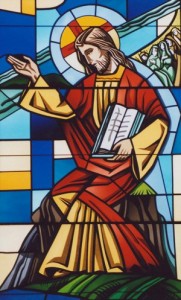 Jesus’ Sermon on the Mount, which is continued in today’s Gospel reading from Matthew, is the Lord’s longest sermon recorded in all of Holy Scripture. It is included in two of the four Gospels — Matthew and Luke. Interestingly, Matthew states that Jesus spoke on the mountain (“He went up the mountain.” Matthew 5:1). Luke, on the other hand, maintains that Jesus gave the sermon after he came down from the mountain (“…coming down with them, he took his stand on a level stretch.” Luke 6:17). Thus, Luke’s version is often called the Sermon on the Plain.
Regardless, the important aspects of the sermon are that the Lord lays out for us what we must do to be His disciples. Jesus has high expectations of us, such hopes for us, as a matter of fact, that we cannot possibly fulfill them. The point is not that we can achieve perfection in the Lord’s eyes, but that we diligently work to do so. Following stewardship as a way of life is that kind of an effort.
Today’s Gospel includes one of the most quoted statements of the entire Sermon. “Seek first the kingdom of God and his righteousness, and all these things will be given you besides.” Sometimes we struggle with exactly where to start. Jesus’ point is that we start with God, place our trust in Him, and the rest will follow. “Tomorrow will take care of itself.”
Copyright © 2014 www.TheCatholicSteward.com
POSITION REQUIRED
Experienced Senior Software Engineer with Project Management experience is seeking employment in Melbourne / Geelong area. Recently arrived from Ireland, he brings to any prospective employer considerable and extensive experience. A Resume is available on request. Excellent character references also available.
For further information and details, please contact Andrew Jarocki on 0404148234, or emailandrew.jarocki@smartermouse.com.
POPE FRANCIS
With the recent publication of Pope Francis’s new apostolic exhortation ‘The Joy of the Gospel’ we have an exciting challenge ahead of us for 2014! So many “firsts”. First pope to choose the name Francis; The first in centuries to live outside the papal palace; first to give a press conference. The first pope to tell the world so much about his inner life, including weaknesses, for which he expresses regret. Here is a man who learns from his mistakes and who clearly yearns to grow in holiness, which he associates with patience toward himself and everyone else as well. When Francis was recently asked: “Who is Jorge Mario Bergoglio?” He replied, “I am a sinner . . . whom the Lord has looked upon. . . . I am one who is looked upon by the Lord.”
For our new Pope the vital thing is to know oneself as a loved sinner – where the adjective is more important than the noun. And God’s work is always done by graced sinners who rejoice in being called just as they are. Again and again since his election the message of Pope Francis is simple and profound: we who follow Jesus must meet people on their own terms rather than on ours. Love for the other comes first.
Since March 13, 2013 we have learned that Francis preaches this message more through his actions and style than by his words. This is why the world has opened its heart to him – because he has so opened his heart to the world. Everything else is then possible and yes – possible here in Melbourne 2014! We are sent with the joy of the Gospel!
Br Mark O’Connor fms Archbishops Office for Evangelisation
Enews February 2014.
FROM FR KEVIN
The Reforming Pope Francis calls new Cardinals “servants”
Yesterday, Pope Francis inducted 19 new Cardinals. In the letter of their appointment, the Pope said their induction was not to be seen as a “promotion”, much less an “honour”, instead the cardinals should see themselves as “servants” marked by “self-abasement and humility”. To emphasise the point, he said there should be no lavish celebrations to celebrate their appointments, rather any celebration should follow “the evangelical spirit of austerity, sobriety and poverty”. When he became a cardinal in 1998, he urged his people to stay in Argentina and give the money to the poor. In 2012, 1,000 people came from New York to celebrate with the new Cardinal Dolan, their archbishop.
Pope Francis his “Man of the Year” the Anglican leader says
Archbishop Justin Welby, Archbishop of Canterbury said early last month that the Pope was extraordinary and led by example. “He has changed the sense of direction and purpose of the Church with his personal example and words,” he said. Both leaders are understood to be working on a joint initiative on how to combat poverty.
A Centenary of Service Between the Two of them
Last month, two of our parish priest retired– Fr Gerry Beasley of Footscray and Msg Peter Kenny of Moonee Ponds. Between them, they have given 103 years of priestly service– not only in their parish, but also in extra-parochial ministry in welfare, ecumenism and marriage Tribunal. Peter was ordained in 1960, Gerry in 1963.
After Easter, the Franciscan Friars are leaving the parish of Box Hill and Box Hill North after 39 years of ministry due to the lack of numbers. This parish contains two large hospitals with 1,100 inpatients, one parish school and one cemetery. The diocese inviting priests to apply for this huge mission.
Dioceses in England, Ireland and Scotland are facing up to fewer priests and are making plans to merge parishes and close churches. The number of priests in Glasgow was 285 in 1977; now there are 85.
Are we encouraging our sons and grandsons to consider entering the Melbourne seminary to try out a vocation to the ordained priesthood?
Prince Charles fears for Christians in Middle East
At a gathering of faith leaders in London in December, the Prince of Wales said Christianity is under threat in its own birthplace due to a wave of persecution by fundamentalist Islamist militants. “For 20 years, I have tried to build bridges between Islam and Christianity… we have now reached a crisis where the bridges are rapidly being deliberately destroyed by those with a vested interest in doing so– through intimidation, false accusation and organized persecution.”
New Mary MacKillop School in South Sudan
Has been funded by Sudanese living in Sydney and this month is taking the first group of secondary girl students. Former refugee Johnson Ngor, of the charity “South Sudan Educates Girls” said “currently only 1 per cent of girls over the age of 12 are able to attend secondary school, but we are determined to change this.”
……Kevin McIntosh
CATHOLIC STEWARDSHIP
CATHOLIC STEWARDSHIP FROM SUNDAYS READINGS
 Eight separate times in the Bible we are told to “Love our neighbor.” As exemplified by today’s first reading from Leviticus, this command is found in the Old Testament, as well. Leviticus is the third book in our Old Testament. It was written some 600 years prior to the birth of Christ, and many scholars feel it was compiled by Moses himself.
In the first reading for this Seventh Sunday in Ordinary Time, God declares to Moses, “You shall love your neighbor as yourself.” Jesus echoes that sentiment in the Gospel from Matthew affirming “You shall love your neighbor.” More than once Christ points out to us that this is the formula for striving for holiness and following Him. All we have to do is love our neighbor and everything else will fall in to place.
From a stewardship outlook, both the first reading and the Gospel point out the other challenge we have. In Leviticus God calls us to”… be holy for I, the Lord, your God, am holy.” Again the Son reaffirms that call by saying in the Gospel, “… be perfect just as your Heavenly Father is perfect.” Of course, we understand that the holiness and perfection to which we are called is impossible for us. Nevertheless, stewardship is one path we can take to move that direction.
Copyright © 2014 www.TheCatholicSteward.com
REFLECTION ON THIS SUNDAYS READINGS – SISTER VERONICA LAWSON rsm
Reflection on the Gospel-Seventh Sunday in Ordinary Time Year A, 23 February 2014 (Matthew 5:38-48)
Today’s gospel is a continuation of Jesus’ teaching on the sort of righteousness, the right relationship and justice, to which his followers are called in their living of the Law. The law of Moses (Exod 21:24, Lev 24:20 and Deut 19:21) included a law of retaliation designed to make punishment for wrongdoing to persons or property proportionate to the offence. It was quite enlightened legislation at the time. In a series of striking images, Jesus invites his followers to go far beyond the strict application of the law and to embrace a new way of thinking about and acting towards those who injure them/us. Relinquishing your right to compensation is one thing. Giving more of your property to one who has stolen from you is quite another. Do we take this teaching literally or do we simply embrace the spirit of non-retaliation that seems to be at the heart of this teaching? A too-easy amnesty does not always bring justice. Last week’s gospel reminded us that there is to be no place for uncontrolled anger or murderous thoughts in our hearts. Both that teaching and this seem to be about taking responsibility for how we live. Harbouring anger can have disastrous consequences for oneself as well as for others. It tends to skew our capacity for right judgement. What happens to us may be beyond our control. What we do with what comes our way is for us to decide. Jesus makes it clear that we have choices in the face of life’s struggles. The disciple is called to choose the way of assuming personal responsibility and refusing the way of retaliation.
The final example or antithesis in the list of six that Jesus offers in the Sermon on the Mount is the most confronting of all: there are to be no limitations on love. Loving one’s enemies is quite a challenge, on a personal as well as a global level. We learn the hard way that we cannot change others. We can only change our attitudes and approaches to them. Venerable Catherine McAuley, founder of the Mercies, wrote that her sisters “never to let the sun go down on their anger”. I used to wonder how they managed that. Over recent years I have found that praying quite deliberately for those who give us a hard time or cause us grief is by far the most effective way of retaining one’s peace of mind and of expelling retaliatory thoughts. For me, it is a matter of gently bringing these people to mind, of breathing in the loving kindness or chesed of God that suffuses the universe and of breathing it out for them. That enables me to think of them in kindly ways and act towards them without rancour, even when the sentiments are not reciprocated.
SOCIAL ‘INJUSTICE’
Have a read of the Media Release about the Rejected Asylum seeker who suicide in the Maribyrnong River on 5 February. It is on the noticeboard and parish website here. May we all pray for a fairer system to give dignity to these individuals who are seeking a better life. The story of Rezene is so sad and unfortunate and what is worse, is that he is not the only one this is happening to. Pope Francis has asked for changes to the handling of refugees. Let us pray that policy makers will realize the plight of these desperate people and act with justice.
WELCOME AND THANK YOU TO THE COLOMBAN PRIESTS
 Welcome and thanks to the Columban priests who will be celebrating 10.30am Mass and Baptisms this weekend.
HISTORICAL COMMITTEE
The 2014 edition of the Carroll Directory has just been released. It contains some of our Parish photos.
…….Historical Committee.


You must be logged in to post a comment.