
Become a foster carer and provide a secure and loving temporary home for a child in need. Foster carers can be single people, couples with or without children, or families with grown up children. Anglicare’s Foster Care Program provides training, equipment and 24 hour professional support to caregivers. We also pay a foster care allowance ($140-$224 per week per child) to help cover costs. Phone Anglicare on 9301 5200 and be part of the real spirit of Christmas.
FESTIVAL OF READINGS AND CAROLS
 The Festival will be held next Sunday 22 December at 7.30pm at OLMC Church. Readings will be from the Old and New Testament beginning with the Fall of Adam and Eve and concluding with God’s coming at Bethlehem. Well-known hymns and carols will follow each of the Readings which have been used for 400 years in England.
A sausage sizzle, champagne and orange juice will be served after 5.30pm Mass for those who would like to stay. All we ask is for some assistance moving the pews in the church around and lots of singing.
“TIME”- PERSON OF THE YEAR IS POPE FRANCIS
The editor said our Pope has become a new voice of conscience “For pulling the papacy out of the palace and into the streets, for committing the world’s largest church to confronting its deepest needs and for balancing judgment with mercy. Pope Francis is TIME’s 2013 Person of the Year, “ wrote managing editor Nancy Gibbs.
“Rarely has a new player on the world stage captured so much attention so quickly–young and old, faithful and cynical– as Pope Francis.”
“In his nine months in office, he has placed himself at the very centre of the central conversations of our time: about wealth and poverty, fairness and justice, transparency, modernity, globalization, the role of women, the nature of marriage, the temptations of power.”
PARISH BINGO
 Thursday evenings at Sunbury football Club, Riddell Road, where all are friends. Santa came last Thursday and gave a lucky bingo player $2000. Ray Lethlean, a parish volunteer for 21 years retired last Thursday. Thanks for your great generosity , Ray. Parish Bingo resumes on Thursday 16 January at 8pm.
CHRISTMAS OFFERINGS
These offerings are given to support the 230 active and 92 retired priests of the Melbourne Archdiocese.
FESTIVAL OF READINGS AND CAROLS
The Festival will be held next Sunday 22 December at 7.30pm at OLMC Church. Readings will be from the Old and New Testament beginning with the Fall of Adam and Eve and concluding with God’s coming at Bethlehem. Well-known hymns and carols will follow each of the Readings which have been used for 400 years in England.
A sausage sizzle, champagne and orange juice will be served after 5.30pm Mass for those who would like to stay. All we ask is for some assistance moving the pews in the church around and lots of singing.
CHRISTMAS NOVENA
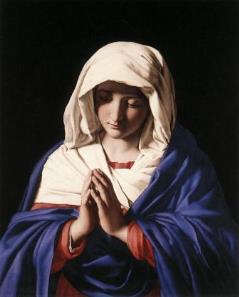 The week before Christmas Day, the Liturgy of the Church changes. At this point, the Advent focus shifts to the Christmas story and the Virgin Mary. These days serve to prepare more directly for the Lord’s birth. It is the best time to hold carols services and to begin to use Christmas carols in the liturgy. During this Christmas Novena weekday Mass will be celebrated in the evening to allow those employed to attend.
OUR PRAYERFUL SYMPATHY
We offer our prayers and sympathy to Frank Ricciardo and his two sons Nunzio and Anthony as Maria Ricciardo entered eternal life last Thursday. Vigil Prayers and Rosary will be prayed on Wednesday at 7.30pm at St Anne’s Church and followed by Funeral Service next day at 11.30am and committal at Sunbury Cemetery. Both of Maria’s parents died in Sicily during the war when Maria was nine years old and she, the eldest child, was then the carer for her siblings.
TRUTH JUSTICE AND HEALING COUNCIL (TJHC)
The Catholic Church will be the focus of the public hearing in December when “Towards Healing” (the Church document used for handling allegations of abuse) will be examined. Church entities are also likely to be the subject of public hearings in 2014.
The TJHC have prepared some flyers for parishioners to take. They will be in the St Anne’s foyer on the Welcome Desk. We encourage all parishioners to access the website at http://www.tjhcouncil.org.au for regular updates. Also, please continue to pray for those who are suffering from the abuse and betrayal of our Church.
Also, a very important statement is printed in this Newsletter regarding the Churches committment to ensure a safe future for the vulnerable and children.
The Catholic Church in Australia, in its submissions to the Royal Commission into Institutional Responses to Child Sexual Abuse and in its communications with both the Catholic and broader communities has made the following commitment:
The leaders of the Catholic Church in Australia recognise and acknowledge the devastating harm caused to people by the crime of child sexual abuse. We take this opportunity to state:
1 Sexual abuse of a child by a priest or religious is a crime under Australian law and under canon law.
2 Sexual abuse of a child by any Church personnel, whenever it occurred, was then and is now indefensible.
3 That such abuse has occurred at all, and the extent to which it has occurred, are facts of which the whole Church in Australia is deeply ashamed.
4 The Church fully and unreservedly acknowledges the devastating, deep and ongoing impact of sexual abuse on the lives of the victims and their families.
5 The Church acknowledges that many victims were not believed when they should have been.
6 The Church is also ashamed to acknowledge that, in some cases, those in positions of authority concealed or covered up what they knew of the facts, moved perpetrators to another place, thereby enabling them to offend again, or failed to report matters to the police when they should have. That behaviour too is indefensible.
7 Too often in the past it is clear some Church leaders gave too high a priority to protecting the reputation of the Church, its priests, religious and other personnel, over the protection of children and their families, and over compassion and concern for those who suffered at the hands of Church personnel. That too was and is inexcusable.
8 In such ways, Church leaders betrayed the trust of their own people and the expectations of the wider community.
9 For all these things the Church is deeply sorry. It apologises to all those who have been harmed and betrayed. It humbly asks for forgiveness.
The leaders of the Catholic Church in Australia commit ourselves to endeavour to repair the wrongs of the past, to listen to and hear victims, to put their needs first, and to do everything we can to ensure a safer future for children.
First published in the Truth Justice and Healing Council’s Towards Healing submission to Royal Commission into Institutional Responses to Child Sexual Abuse, September 2013
Truth Justice and Healing Council
PO Box 4593 KINGSTON ACT 2604 | Tel: +61 2 6234 0900 | Fax: +61 2 6234 0999
TRUTH JUSTICE AND HEALING COUNCIL (TJHC)
The Catholic Church will be the focus of the public hearing in December when “Towards Healing” (the Church document used for handling allegations of abuse) will be examined. Church entities are also likely to be the subject of public hearings in 2014.
The TJHC have prepared some flyers for parishioners to take. They will be in the St Anne’s foyer on the Welcome Desk. We encourage all parishioners to access the website at www.tjhcouncil.org.au for regular updates. Also, please continue to pray for those who are suffering from the abuse and betrayal of our Church.
WORLD AIDS DAY
Sunday December 1 is World AIDS Day. Please spare a thought for our HIV positive brothers and sisters, both locally and around the world, who continue to face discrimination and stigma in addition to the health challenges the virus presents. Next year Melbourne will host the International AIDS conference and the theme is to be “Stepping up the Pace”. Please join with the delegates of AIDS 2014 in demanding an end to stigma and discrimination now and reflect upon, as we all should, how our thoughts, words and actions might perpetuate stigma & discrimination. And remember, there is great hope for people with the virus, provided they can access proper care and medicines, with treatment advances leading to much longer life expectancies.
THE SECOND RITE OF RECONCILIATION
As the Parish will be celebrating the second rite of reconciliation during Advent, parishioners may like to read through this explanation from the Liturgical Commission.
From Liturgy Lines
(Liturgy Lines are short 500-word essays on liturgical topics written by Elizabeth Harrington, The Liturgical Commission’s education officer. They have been published every week in The Catholic Leader [Brisbane] since 1999. They may be reproduced by parishes for private non-commercial use, provided that the copyright line is retained)
The Second Rite of Reconciliation
Communal Reconciliation
Several years after Rome placed greater restrictions on its use, many Catholics still lament the loss of regular celebrations of the third rite of reconciliation. Communal reconciliation is still open to us, however, through the Rite for Reconciliation of Several Penitents with Individual Confession and Absolution, the second rite. Celebrated as it is intended, this form can fill the void left by the loss of the third rite.
The second form of the sacrament of penance is not a ‘split-personality’ liturgy in which the first half is a communal celebration and the second half a private one. Sometimes, however, the manner of celebration conveys exactly this impression. I have attended second rites where, after the introduction, liturgy of the word, and examination of conscience, the priests moved to the privacy of the church’s confessionals and sacristies. One by one, people entered these rooms, often for a considerable length of time, to confess their sins and receive absolution. In fact, from this point on it was just like Saturday afternoon confessions, but with several priests and a much bigger crowd. People were even told to leave after they had had their ‘turn’ and not wait around for the concluding rites.
This is not at all what the second rite intends. Such poor celebrations turn people away and deprive them of a wonderful opportunity to experience communal reconciliation which ‘shows more clearly the communal nature of penance’. (Sacrament of Penance #22)
The second form of the sacrament of penance is a communal liturgical celebration from beginning to end. It begins with the community listening to the word of God. The homily emphasises our need for repentance and the infinite mercy of God. During the examination of conscience, the assembly reflects together on where and how they have fallen short of their baptismal commitment to follow Christ.
The individual confession and absolution that follows is communal too in that the penitents approach the confessors in full view of all present. The priests stand at appropriate points around the worship space in such a way that penitents can be seen but not heard by others. This is easily arranged in most churches. Those who wish to confess their sins approach one of the priests. While no restriction is placed on the individual’s confession, good manners and common sense dictate that people limit the time they spend with confessors. More time for integral confession and spiritual guidance is available at the first rite.
It is a moving experience to witness fellow Christians humbling themselves by publicly approaching a confessor for forgiveness. As they do, we pray for them, that they will know the fullness of God’s grace and mercy.
After the confessions, the ceremony concludes with a proclamation of praise, a prayer of thanksgiving and a blessing. These are an integral to the celebration, not an optional extra!
To ensure that the rite is celebrated in a fruitful way, both parishioners and the priests who will take part need to be informed well beforehand about the nature and purpose of the rite and their participation in it.
copyright: The Liturgical Commission
THE YEAR OF FAITH IN TODAYS READINGS
 Reflection on the Gospel-Last Sunday in Ordinary Time C, The Feast of Christ the King 24 November 2013
Sister Veronica Lawson rsm
(Luke 23:35-43)
Sadly, there have always been those who scoff at others or make fun of them, generally because they themselves feel threatened in some way. Those on the receiving end of such bullying behaviour often feel powerless and demeaned. There may be some comfort for such people in today’s gospel. It presents a serious case of bullying and two dignified responses that undermine the destructive power of the bullies.
The first dignified response is that of Jesus who refuses to retaliate when the Roman soldiers mock him or when another convicted criminal [‘one of the criminals hanging there’] derides him. Another dignified response comes from ‘the other’ criminal. This man has the insight to recognise that Jesus is innocent. He also has the courage to challenge the injustice of what is going on around him. Having offered his challenge, he then turns to Jesus and addresses him by name: ‘Jesus, remember me when you come into your kingdom.’ His request reveals his faith in Jesus as the human face of God. It also reveals his knowledge of Jesus’ mission, first announced in Galilee: ‘I must proclaim the good news of the kingdom of God to the other cities also; for I was sent for this purpose.’
Jesus points to God and God’s reign or empire. Jesus’ convict companion points to Jesus’ reign or empire. The reign of God and the reign of Jesus are one and the same. In turning to Jesus and putting his request, this criminal becomes a disciple and receives the assurance of a share in Jesus’ life with God: ‘Today you will be with me in Paradise.’ ‘Jesus, remember me’ is a fitting prayer in the face of all life’s struggles. Next time we sing these words or pray them in our hearts, we might spare a thought for their author, a convicted Jewish criminal who had the courage to rise above his own suffering and challenge the unjust oppression of an innocent neighbour. Like Jesus, he was and continues to be an instrument of God’s reign.
POPE INVITES THE VIEWS OF SUNBURY CATHOLICS ON THE FAMILY
Pope Francis has invited parishioners from every diocese in the world, including the Archdiocese of Melbourne, to participate in a worldwide Catholic questionnaire on the many challenges facing the family today. It covers: faith in family life, marriage, divorce, annulment, same sex unions, natural family planning and the participation in sacraments as part of family life. Attached is a summary we have made of the questions to help us in the consultation which Pope Francis has set up.
Please take home the sheet of questions and return your responses next Sunday 1 December. All replies will be collated and sent to the Melbourne Archdiocesan Office for Life, Marriage and the Family.
If you wish to read the original nine pages of questions, you may visit http://www.cam.org/synod. This is the first time a pope has consulted every fellow Catholic. Let us take up the opportunity.
……Kevin McIntosh
OUR PRAYERFUL SYMPATHY
We offer our prayers and sympathy to Barry, Eileen and Mick as their father Jerry Keohane entered eternal life last Thursday having received the Sacrament of Viaticum (Holy Communion for the road– via (Latin) that morning from our Communion Minister to the Sick, Jean. Jerry was one of our parishioners for 26 years and was very fond of Sunbury which he found very friendly and which reminded him of the rolling hills of County Cork, Ireland. Vigil Prayers will be recited on Thursday evening at 7.00pm and his Funeral Mass will be at OLMC Church at 2pm on Friday being a pupil free day.
THE YEAR OF FAITH IN TODAYS READINGS
Reflection on the Gospel-33rd Sunday in Ordinary Time C, 17 November 2013
Sister Veronica Lawson rsm
(Luke 21:5-19)
Sixty years ago there was no Sydney Opera House. A hundred years ago there was no Harbour Bridge. It is hard to imagine a time when they did not exist or a time when they will cease to be, such is the status these monuments have acquired over a very short span of history. They are a source of wonder for tourists and locals alike. They have their counterparts elsewhere in our contemporary world. A few years ago, New York’s World Trade Centre was another such icon, seemingly indestructible and holding the pride of an economically and politically dominant nation, even if less aesthetically engaging than Sydney’s monuments.
In first century Palestine, the newly refurbished Jerusalem Temple was both aesthetically stunning and symbolically charged. It functioned primarily as the centre of religious worship. It was also an important locus of financial and political power. Its significance can hardly be exaggerated and its destruction at the hands of the Romans in 70CE was a devastating blow for the Jewish people. Luke is writing some twenty years after this event. He wants to tell his communities that the destruction of the Temple did not signal the end of the world, though that is how it might have seemed at the time.
There is life to be lived and there are struggles to be endured before God’s final judgment. Luke wants to offer hope and encouragement in the face of conflict and persecution and family division. He wants to offer his readers a caution not to listen to everyone who claims to know the time [kairos] of God’s visitation.
Like Jesus, disciples can expect to be ‘handed over’ and brought before political authorities. They are to find in this an opportunity to give witness or ‘to testify’. In his second volume, Luke has Jesus commissioning the disciples to be his witnesses ‘in Jerusalem, Judea, Samaria, and to the ends of the earth’ (Acts 1:8). They don’t have to worry about what to say in their own defence: ‘I will give you words and wisdom that none of your opponents will be able to withstand or contradict.’ Endurance or patience is the way to life. The Greek term used here evokes the parable of the sower: ‘but as for that [the seed] in the good soil, these are the ones who, when they hear the word, hold it fast in an honest and good heart, and bear fruit with patient endurance’ (Luke 8:15].
As we approach the end of the liturgical year, we are called to witness to a gospel way of life, to hold the word of God fast in honest and good hearts, and to trust that we are not alone in the everyday struggles of life, even when the world seems to be collapsing around us.
SING A LONG
 A Sing-a-Long will be held at Goonawarra Aged Care on Friday 20th December from 2.30pm to 3.15pm. All welcome. Come and catchup with old parishioners and friends and relatives. Help to spread a little Christmas cheer to those who don’t get out much……….no, sorry, that’s actually me!
REPORT OF VICTORIAN PARLIAMENTARY INQUIRY

“BETRAYAL OF TRUST”
The Victorian Parliamentary Inquiry into the Handling of Child Abuse by Religious and other Non-Government Organisations released its report last Wednesday.
For access to the report, the responses by the Church, recent updates, or to sign up for email alerts, visit the Church’s website: http://www.facingthetruth.org.au. As you know, we gathered as a parish last Wednesday for our Prayer Service of Sorrow for the victims of abuse. Those present appreciated all the planning by our Liturgy Group.
THE YEAR OF FAITH IN TODAYS READINGS
Reflection on the Gospel-2232nd Sunday in Ordinary Time C, 10 November 2013
Sister Veronica Lawson rsm
(Luke 20:27-38)
Is there life after death? If so, what does that mean? Will we be united in death with those whom we have loved in this life? Do the bonds of love experienced in this life continue beyond the grave? Are our loved ones far from us in death? How do they live on, if indeed they do? These are questions that have preoccupied human beings for millennia. Our Christian faith tradition, grounded in the life, death and resurrection of Jesus of Nazareth, offers no clear answer to any of these questions. It simply offers a call to faith in life after death and in God as ‘not of the dead, but of the living.’
As the liturgical year draws to a close, the readings invite us to ponder this mystery of the bonds of love that persist, in unimagined and unimaginable ways, even after death. Some Sadducees ‘who say there is no resurrection’ put a loaded question or case study to Jesus in an attempt to expose as nonsensical the Pharisaic belief in resurrection. In the process, they try to discredit Jesus as a teacher of the Law.
As usual, Jesus refuses to be entrapped. The diversity of Jewish opinion and belief implied in this passage may come as a surprise to those who think of Judaism at the time of Jesus as a religion with a unified theological system. There was certainly agreement among the parties or sects on four key aspects of their faith, namely, monotheism (one God); election (Israel as God’s chosen people); the call to be faithful to the covenant; and the Jerusalem Temple as the meeting place between God and God’s people. At the same time, there was room for considerable diversity. Life after death and the resurrection of the dead were among the many contested beliefs.
As I sit with a 93 year-old Mercy elder who still has a twinkle in her eye despite her failing health, I ponder the mysteries of life and death. I know in my heart that the life she has generated and the love she has known and brought to others over the best part of a century will somehow continue through the grace of the God of the living. For the moment, that is sufficient response to the reading for this Sunday. Jesus of Nazareth refuses entrapment and invites belief in a God for whom all the dead are alive. We live by faith in that God, and in hope of the resurrection.
REPORT OF VICTORIAN PARLIAMENTARY INQUIRY
The Victorian Parliamentary Inquiry into the Handling of Child Abuse by Religious and other Non-Government Organisations is due to report this coming week,
11 – 15 November.
For access to the report, the responses by the Church, recent updates, or to sign up for email alerts, visit the Church’s website: www.facingthetruth.org.au
 Our Lady of Mount Carmel Parish Sunbury
You must be logged in to post a comment.