STEWARDSHIP……A WAY OF LIFE

pentecost-icon

CATHOLIC STEWARDSHIP FROM SUNDAYS READINGS

The readings for this Pentecost Sunday abound with stewardship messages and imagery. In a brief deliberation it is impossible to mention all, let alone expound upon them. Nevertheless, the second reading from 1 Corinthians includes two phrases that absolutely capture the quintessence of stewardship.

St. Paul asserts: “There are different kinds of spiritual gifts, but the same Spirit.” This is tantamount to the oft-quoted declaration, “Everything we are and everything we have comes from God.” All of the readings on Pentecost emphasize the Holy Spirit — also known as Holy Ghost, Paraclete, Advocate, Counselor, Comforter, and Helper — and how this Spirit pervades our lives and imbues us with all that is holy.

St. Paul adds: “To each individual the manifestation of the Spirit is given for some benefit.” Benefit to whom? Certainly, it is a benefit to us as individuals, so that we can use those gifts to help God and assist others. That is stewardship — using the gifts we have received to build the Kingdom of God and to serve and comfort others.

Our challenge is to identify those gifts; channel those gifts in ways they can be shared; and, develop those gifts so they enrich all of those around us.

Copyright © 2013 www.TheCatholicSteward.com

STEWARDSHIP……A WAY OF LIFE

Beloved-Disciple-Icon

CATHOLIC STEWARDSHIP FROM SUNDAYS READINGS

Jesus calls us to “Love one another” many times in Holy Scripture. That admonition seems so simple. Yet, many of us struggle with it. It is as if the Lord says to us, “Stewardship is actually quite simple. Rather than trying to grapple with definitions and specifics, if you just do this, you will indeed be living lives of stewardship: Love one another.”

How is that love reflected in stewardship? Paul and Barnabas in the first reading exemplify stewardship by proclaiming the Good News; however, their willingness to travel so extensively and to meet so many and to work with them can be summarized with the word “persistence.” That is what our approach to stewardship needs to be persistent and consistent.

As John says in the second reading from Acts, it is time for us to make all things new. That, too, is what stewardship calls us to do, especially during this Easter season, a time when we should solidify our plans and efforts from Lent and Easter.

Finally, Jesus does more than just tell us to “Love one another” in today’s Gospel. He also reminds us that this is merely a reflection of the love He has and has shown for us. The more filled we are with the love of Christ, the more love we have, and the better stewards we can be.

Copyright © 2013 www.TheCatholicSteward.com
PARISH RETREAT

A report on our retreat and its implication in our life as parish will be given next Sunday.
At the time of printing this newsletter the Retreat was still in progress.

STEWARDSHIP……A WAY OF LIFE

ascension-icon

CATHOLIC STEWARDSHIP FROM SUNDAYS READINGS

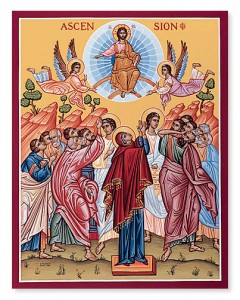
According to the Gospel of Luke, Jesus gives his final instructions to His Apostles just prior to His Ascension into Heaven, which we celebrate today. He tells them that they are His witnesses, and charges them to go out and spread the Good News. In addition, in the first reading from Acts we learn that they are to spread this Good News, be witnesses, “to the ends of the earth.”

Nevertheless, we subsequently learn that they went back to Jerusalem (the Ascension occurred at Bethany, which is only a few miles from Jerusalem), and they prayed. In fact, they prayed until Pentecost (next Sunday, May 19). That was in many ways an act of stewardship. Jesus had cautioned them that they were not prepared for the ministry to which He was calling them. We are all called, but that does not mean we are prepared.

They prayed, and we need to pray. Scripture also notes that they “prayed with one accord.” Assuredly they prayed as individuals, but they also prayed together. As good stewards, we need to do that, too. It brings us closer to the Lord we must serve; it helps us to understand what Jesus expects of us. Prayer provides the foundation for lives of service, lives of stewardship. If we remain close to Jesus, we will never be left unprepared to be good stewards.

Copyright © 2013 www.TheCatholicSteward.com
STEWARDSHIP……A WAY OF LIFE

christ-us2

CATHOLIC STEWARDSHIP FROM SUNDAYS READINGS

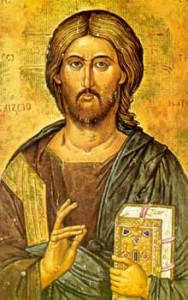
lmost every definition of stewardship eventually gets down to the notion of “trust” — trust in God. That is certainly Christ’s message in today’s Gospel, when He says, “Do not let your hearts be troubled or afraid.” In other words, trust Me; trust My Father; and trust the Holy Spirit, Who is always with you and among you.

Nevertheless, we must never lose sight of the fact that trust as we understand, both it in relation to the Lord and in relation to stewardship, is a two-way street. Yes, it is our trust in God that allows us to take the risks involved in stewardship and give of ourselves and of what we have. Equally important, though, is that other feature of stewardship, of trust.

Trust has a dual meaning. Of course, it means that we have confidence in God as a presence, helper and comforter in our lives. Nonetheless, it also involves that other meaning of trust — something given to us, an interest we hold for God and the benefit of others. God entrusts us with several things we hold in trust: our families; the very earth on which we live; the Church; Holy Scripture and the Gospels. These are given to us in trust that we might nurture them, expand them, and return them to God with increase.

We are called to trust God, as He is our Advocate, but we must never forget that God trusts us, too. As Blessed Mother Teresa once said, “I know God won’t give me anything I can’t handle. I just wish He didn’t trust me so much.”

Copyright © 2013 www.TheCatholicSteward.com
STEWARDSHIP……A WAY OF LIFE

good_shepherd

CATHOLIC STEWARDSHIP FROM SUNDAYS READINGS

Stewardship is a joyful response in gratitude for the many gifts granted by the Lord. Doesn’t that sound a lot like Paul and Barnabas as they left Antioch in today’s first reading? “The disciples were filled with joy and the Holy Spirit.”

The readings for this Fourth Sunday of Easter are filled with the reasons we have to be joyful. From the first reading when Paul makes it clear that each of us is part of the Kingdom of God to the second reading in which John has a vision which includes every “nation, people, race, and tongue” to the Gospel in which Jesus comforts us by saying of us, “I give them eternal life, and they shall never perish,” it is clear that we, too, are a chosen people.

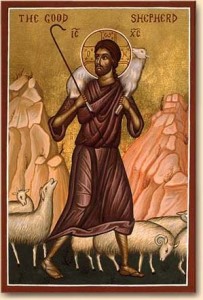
Calling stewardship a “joyful response” brings to mind other ways that way of life has been described, including “a grateful response” and “a disciple’s response.” All of those apply to the good steward. Because we place our trust in the Lord, we understand that He is the Shepherd, the Lamb of God, and we are His flock.  Another psalmist proclaims, “The earth is the Lord’s, and everything in it.” (Psalm 24:1) The more we come to see that God entrusts these things to us for the purpose of serving and glorifying God, the more we are able to offer them joyfully back to God.

Copyright © 2013 www.TheCatholicSteward.com
STEWARDSHIP……A WAY OF LIFE

Feed my sheep icon

CATHOLIC STEWARDSHIP FROM SUNDAYS READINGS

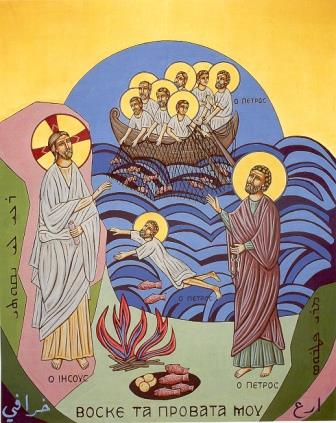
Can there be a more specific instruction to us as stewards than “Feed my sheep?” Of course, Jesus was saying this to St. Peter, and the meaning behind these words was much broader than what it may be to us. However, the basic charge is the same.
The good steward recognizes that each day is a challenge to reach out to others, a call to each of us to represent our Lord in our dealings for and with everyone with whom we come in contact. Just as is the case in the readings for this Third Sunday of Easter, it is not necessarily easy. Peter, John, and the others were willing to be punished, prepared to sacrifice to be followers of Jesus.
What do we do to feed the Lord’s sheep? When we go to Mass, we are one of the sheep coming to be fed. It would seem that Jesus is challenging us to do more than that. If we view ourselves as stewards of the faith, as stewards of our families, as stewards of our neighborhoods and communities, it means that we are expected to do more, to give more of ourselves to assure that the flock is truly tended and fed.
We live in an extremely secular world, a world that constantly places barriers to us as Catholics and Christians. Just as Peter, John, and the others respond, we, too, need to realize that there are times when we must recognize that “We must obey God rather than men.”

Copyright © 2013 www.TheCatholicSteward.com

STEWARDSHIP……A WAY OF LIFE

divinemercy2

CATHOLIC STEWARDSHIP FROM SUNDAYS READINGS

The real stewardship message for this, the Second Sunday of Easter, is found in the Gospel of John. It is a story with which almost all of us are familiar — the story of “Doubting Thomas.” This loyal Apostle to the Lord was the first of the Apostles to actually say that he would die for Jesus. Thomas followed Jesus for three years, only to see Him crucified and buried, is disheartened, just as we sometimes are.

Why is Thomas not in the room with the other Apostles? Perhaps he, just as each of us can be, is deeply discouraged, profoundly disappointed, and he is off wandering, trying to reconcile what has happened, what he has witnessed. When he returns and hears the accounts of Jesus’ appearance, even from Peter, Thomas is skeptical.

At the heart of a stewardship way of life is trust in the Lord. Like Thomas, we sometimes want to see proof for ourselves; experience personally that the hope promised by Christ is real. Living a stewardship way of life is a way of achieving that. Even though, like Thomas, we may have moments of doubt, if we truly pursue service and sacrifice, we, like Thomas, are proclaiming, “My Lord and my God.” And we, like Thomas, will hear those wonderful words, “Blessed are those who have not seen, and have believed.”

Copyright © 2013 www.TheCatholicSteward.com

STEWARDSHIP……A WAY OF LIFE

sundayofeaster

CATHOLIC STEWARDSHIP FROM SUNDAYS READINGS

Our reflection on the Easter readings may be as profound as any throughout the liturgical year.

As difficult as Jesus’ Resurrection is to understand, it is important to note what happened when John and Peter arrived at the tomb as reported in today’s Gospel. They were initially in disbelief, even though Jesus had tried to make it clear to them over and over. John, it is said “saw and then he believed.” We hearken back to our Scripture reading of a few weeks ago that proclaimed, “Faith, Hope, and Love, but the greatest of these is love.” Today — Easter — is the fulfillment of hope. That is why we greet this day with joy, but it is also why we as stewards must fulfill that hope by living lives of love.

The first reading on this Holy Easter is not from the Old Testament, as is most common, but it is from the Acts of the Apostles. Peter speaks of being present, being a witness, and if we listen carefully to his words, we can sense his enthusiasm, his dedication, and his zeal that Christ has risen.

We are called to be an Easter people. There is a significant difference between being an Easter people and just a Church people. If we are truly an Easter people, our focus is on the victory that Christ’s Resurrection presents to us. Easter and the promise it presents us make us a joyful people who worship with a sense of hope and confidence. Easter people as good stewards live their lives with an attitude of gratitude, not a sense of obligation. Easter people do not fear death, but have comfort in the promises and salvation of Christ.

“Think of what is above, not of what is on earth. For you have died, and your life is hidden with Christ in God. When Christ your life appears, then you too will appear with him in glory.” (Col 3:3-4)

Copyright © 2013 www.TheCatholicSteward.com

STEWARDSHIP……A WAY OF LIFE

Palm-Sunday-B

CATHOLIC STEWARDSHIP FROM SUNDAYS READINGS

This Palm Sunday represents one of the great liturgical dichotomies. We begin the liturgy with a procession of celebration, and we continue to the reading of the Passion, which reaches its zenith with the Lord calling out, “ ‘Father, into your hands I commend my spirit’; and when he had said this he breathed his last.” It is as if we move from joy and celebration to utter defeat and emptiness. However, that is the essence of our entire Lenten journey, and our beginning of Holy Week, which is today. One of the important aspects of our sense of stewardship is gaining an understanding of our Faith, some of the details relating to what we do and why we do it.

The steward understands that she/he travels with the Lord every step of the way, from the highs to the lows, from triumph to evident disaster. Like Peter, nonetheless, we may become reluctant. What are we really following and what are we really believing and practicing? We may proclaim Jesus as our Lord and Savior. Throughout Lent we have been striving to deepen our relationship with Him. Nevertheless, when it comes right down to it, we may resist His invitation to us because it can mean pain, sacrifice, and suffering. That is why we must experience Lent. That is why we must experience His Passion. And that is why next week on Easter Sunday we will arise with the Lord in triumph, joy, and celebration. Truly, “Blessed is He who comes in the name of the Lord.”

Copyright © 2013 www.TheCatholicSteward.com

PARISH RETREAT– SPIRITUALITY IN OUR TIMES

Our Parish Retreat will be held in Easter time, Monday 22 April to Satruday 27 April. The retreat has three modules– renewal of our mind, renewal of our heart and renewal of our action. There are three elements in each session: some input, some group sharing ans some prayer. It is time for a renewal as we live in changing times and we need a boost. The sessions will be held in the morning and evening in the Parish Centre. The retreat team will comprise a laywoman, a priest and a religious sister– mixed vocations. Please mark your diaries.

The last retreat was very well received by 150 people who attended.

STEWARDSHIP……A WAY OF LIFE

staugustine

CATHOLIC STEWARDSHIP FROM SUNDAYS READINGS

If there is one consistent message in the readings for this Fifth Sunday of Lent, it is that we must look to the future, not to the past. As Catholic Christians, we are a people of eternity, a people who concentrate on the hope and promise of our Lord and Savior. Jesus reminds us many times that His “Kingdom is not of this world.” (Jn 18:36)

Living a life of stewardship places a person with an eye always on that other kingdom. St. Augustine once wrote that “A life of holiness does not lead one to Jesus, but Jesus can lead one to a life of holiness.” That is our challenge as good stewards — to keep our eyes on the Lord, our minds open to His Word., and our hearts open to His love. If we do that in the present, the past will not weigh heavily upon us, and the future will take care of itself.

If we truly attempt to live lives of stewardship, we must keep in mind that we follow that way of life as a “calling.” However, we are not to condemn others because they fail to live that way. We also must remember to love all regardless whether we think they are “good” Christians or not. All of this is fulfilled because we understand that our rewards are in Heaven, not necessarily on earth — in the future, not in the present. The eminent scholar, author, and Christian apologist C.S. Lewis put it this way: “When Christians cease to think of the other world in their future is when they become ineffective in this one.”

Copyright © 2013 www.TheCatholicSteward.com
STEWARDSHIP……A WAY OF LIFE

Prodigal_Son

CATHOLIC STEWARDSHIP FROM SUNDAYS READINGS

All of the readings for this Fourth Sunday of Lent deal with reconciliation and forgiveness. There is a strong suggestion relating to our Sacrament of Penance (Confession, Reconciliation).
An important characteristic of stewardship is to faithfully follow our beliefs. As Catholics we are called to Confession at a minimum annually, and in reality more than that. Canon 989 states: “All the faithful who have reached the age of discretion are bound faithfully to confess their grave sins at least once a year.”
Reconciliation/Confession is one of the least understood of the Sacraments of our Catholic Church. In reconciling us to God, it is a great source of grace, and we are encouraged to take advantage of it often. The Church strongly recommends that, in preparation for fulfilling our Easter Duty to receive Communion, we go to Confession.
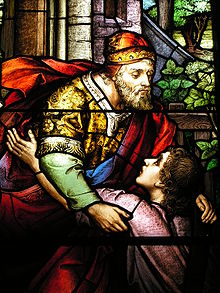
The Gospel from Luke, the parable of the Prodigal Son, is filled with forgiveness and reconciliation. The son’s actions and his desire to be reconciled follow the requirements each of us must follow for our own reconciliation/confession to be valid.
We are called to be a forgiving people. Just as the father in the parable, who, of course, represents our own Heavenly Father, completely forgives his son and welcomes him and celebrates his return, we must reach out to those around us — perhaps family or friends with whom we have some dispute, and forgive and seek reconciliation. Lent is a perfect time to do that.

Copyright © 2013 www.TheCatholicSteward.com

STEWARDSHIP……A WAY OF LIFE

parable-fig-tree

CATHOLIC STEWARDSHIP FROM SUNDAYS READINGS

It would seem appropriate during Lent that Holy Scripture would issue some warnings to us. In effect that is what occurs throughout the readings for this Third Sunday of Lent. Each reading contains a caution to us, or a strong suggestion.
St. Paul does not mince words in his letter to the Corinthians. In Paul’s last statement in this scriptural passage, he issues a warning that is so applicable to us for Lent — “Therefore, whoever thinks he is standing secure should take care not to fall.”
The parable in Luke’s Gospel addresses exactly the same issue that Paul wrote about. In terms of historical context, this Gospel is near the end of His ministry, as His Crucifixion is fast approaching. The Lord is particularly disturbed by the way those who listen to Him are ignorant of the significance of His presence, the magnitude of this historical time.
Simply put, many scholars agree that we are that fig tree. Jesus’ warning to us is particularly crucial during our Lenten appreciations — it is not the appearance of holiness  — through prayer, fasting, and almsgiving — which is important. It is the fruits of our penitence that are important.
Living as a Christian steward is a response to Jesus’ call to discipleship and holiness. The steward nonetheless must be on constant watch — constant preparation. Stewardship, like our foundations for Easter throughout Lent, is an ongoing journey — a daily exercise and challenge. We, too, must take care “not to fall.”

Copyright © 2013 www.TheCatholicSteward.com
STEWARDSHIP……A WAY OF LIFE

Icon_Transfiguration

CATHOLIC STEWARDSHIP FROM SUNDAYS READINGS

Today’s readings pose a challenge to us — they ask us to look beyond this life and this world. Of course, Jesus did that often in His ministry. In relation to His own life and His time on earth, He was fond of saying something similar to what He said in John 16:36, “My Kingdom is not of this world.”

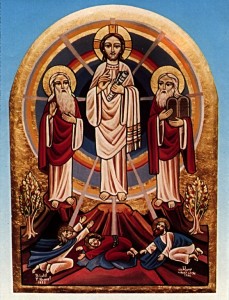
As is often the case in Scripture, all of the ideas about Heaven and life in Heaven are coalesced in the Gospel from Luke, the recounting of the Transfiguration. The
Transfiguration has been called “the culminating point in Christ’s ministry on earth” — with His Baptism as the beginning point and His Ascension as the end point. During the Transfiguration His body and His face became dazzling — so bright that it might almost blind someone looking upon Him. It was His Divinity showing through.

Peter, who can be very much like us, wanted to stay there on the mountain top, build some tents, and create a permanent experience. But permanence is only in Heaven. Heaven is eternity. Stewardship calls us to recognize that — to strive to be as holy as we can be, and to serve as unconditionally as we possibly can. Nevertheless, what should be our driving force — our true comprehension — is that for us, just as for Jesus, our Kingdom is really not of this world. People who embrace stewardship as a way of life live with an awareness of the present and the future, of both time and eternity.

Copyright © 2013 www.TheCatholicSteward.com
STEWARDSHIP……A WAY OF LIFE

lent-new

CATHOLIC STEWARDSHIP FROM SUNDAYS READINGS

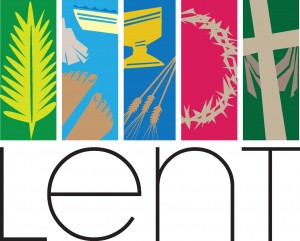
On this, First Sunday of Lent, we are called to continue our 40-day Lenten journey with most of it before us. For us it is 40 days of preparation for the Resurrection of the Lord, during which we are called to prepare through prayer, penance, repentance, almsgiving, and self-denial. Traditionally, we, as Catholics have tended to focus on the denial aspects of Lent — that is, we give things up; we make an effort to make sacrifices, particularly in the area of foods, to give ourselves a sense that Lent is a time when we need to show these signs to God that we are willing to avoid things we like as a tribute to the Lenten season — to the fact that Jesus made the supreme sacrifice for us.

However, in recent years, even though these kinds of self-denial are important, it is equally essential that we make active efforts to deepen our faith, to gain a greater understanding of what it means to truly believe.

From a stewardship outlook, every day is filled with temptation. There is the temptation to view our many gifts as ours, not God’s. While we are tempted to share what we see as feasible after we have met our own needs and wants, we should be focusing on sharing our first fruits.

Jesus was confident in His Father; He trusted Him and was thus able to resist the temptations presented Him by the devil. We need to develop that same kind of trust. The last sentence of the Gospel makes it clear that the devil is not done with the Lord, nor with us: “And when the devil had tried every temptation, he departed from him for a while.” It is “the while” against which we need to be prepared.

Copyright © 2013 www.TheCatholicSteward.com
STEWARDSHIP……A WAY OF LIFE

CALLING-OF-PETER-AND-ANDREW

CATHOLIC STEWARDSHIP FROM SUNDAYS READINGS

Each of the readings for the Fifth Sunday in Ordinary Time makes reference to people being “called.” Of course, each of us is called by God to be a disciple. The challenge for us is to hear that call, understand it, and then to respond to it with action.
The first reading from Isaiah reminds us of a hymn based upon that reading most Catholics have sung and heard for the past few decades — “Here I am Lord.” The hymn portrays Isaiah’s response to God calling him. The lyrics in the refrain, known to many, are “Here I am Lord. It is I lord. I have heard you calling in the night. I will go, Lord, where you lead me. I will hold your people in my heart.”
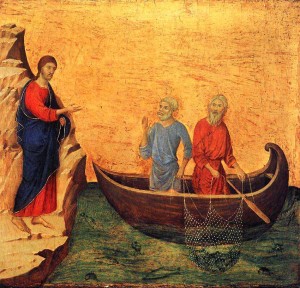
The Gospel from Luke is a story known popularly — of how Jesus told Peter and James and John to go out in Peter’s boat and fish again, even though they had caught nothing previously. The catch was enormous and it was a changing point in the vocations of those men. They were fishermen, and had probably been fishermen since they were boys. Fishing was their vocation, but Jesus called them to something higher — to be “fishers of men,” and they responded by changing vocations from fishermen to apostles — messengers.
Some of us, like Isaiah, are called to vocations of discipleship which function parallel to our life’s vocation, our jobs. Others, like Peter, are called to lifetime vocations — holy orders. The point is not which vocation we follow — it is that as good stewards we recognize we have a vocation — a role — in building the Kingdom of God. Are we prepared and are we responding in the way we should?  “Here I am Lord… I will go, Lord, where you lead me.”

Copyright © 2013 www.TheCatholicSteward.com

STEWARDSHIP……A WAY OF LIFE

ST-LUKE-LOVE

CATHOLIC STEWARDSHIP FROM SUNDAYS READINGS

The readings for this Fourth Sunday in Ordinary Time are so rich in content and include some of the most quoted passages, sentences, and phrases in all of scripture.
Jeremiah means “Yahweh” — God. The particular passage, “Before I formed you in the womb, I knew you” (Jer 1:4), reminds us that God has a plan for each of us, and He has known it from before we were conceived. Our challenge as stewards is to discern that plan as best we can, and to follow it.
Of, course, the second reading from Paul’s first letter to the Corinthians is also very familiar. It is a definition of what good and holy love is in its purest form. “So faith, hope, and love remain, these three, but the greatest of these is love.” (1 Cor 13:13)
Luke’s Gospel recounts Jesus speaking in the temple in Nazareth. As is the case with the other two readings, one of the most quoted sentences in scripture is part of this passage: “No prophet is accepted in his own native place.” The key is how Jesus responds to the rejection by his friends and neighbors. He calmly loves them and moves through them to depart.
The three readings tie closely together — in the first reading we are urged to identify our own role as Christian stewards; the second reading makes it clear that love of those around us is the way to live out that mission; and the Gospel reminds us that there will be obstacles, but our proper response is love.

Copyright © 2013 www.TheCatholicSteward.com

STEWARDSHIP……A WAY OF LIFE

CATHOLIC STEWARDSHIP FROM SUNDAYS READINGS

ST-LUKE-LOVE

The readings for this Fourth Sunday in Ordinary Time are so rich in content and include some of the most quoted passages, sentences, and phrases in all of scripture.
Jeremiah means “Yahweh” — God. The particular passage, “Before I formed you in the womb, I knew you” (Jer 1:4), reminds us that God has a plan for each of us, and He has known it from before we were conceived. Our challenge as stewards is to discern that plan as best we can, and to follow it.
Of, course, the second reading from Paul’s first letter to the Corinthians is also very familiar. It is a definition of what good and holy love is in its purest form. “So faith, hope, and love remain, these three, but the greatest of these is love.” (1 Cor 13:13)
Luke’s Gospel recounts Jesus speaking in the temple in Nazareth. As is the case with the other two readings, one of the most quoted sentences in scripture is part of this passage: “No prophet is accepted in his own native place.” The key is how Jesus responds to the rejection by his friends and neighbors. He calmly loves them and moves through them to depart.
The three readings tie closely together — in the first reading we are urged to identify our own role as Christian stewards; the second reading makes it clear that love of those around us is the way to live out that mission; and the Gospel reminds us that there will be obstacles, but our proper response is love.

Copyright © 2013 www.TheCatholicSteward.com