
 The Maltese Gharb Club of Melbourne invites you to celebrate the Feast of the Visitation of the Blessed Virgin Mary to St Elizabeth on Sunday 1 June at St Bernadette’s Catholic Community Centre, Cooke Ave, North Sunshine. Mass at 2.30pm celebrated by Fr John Taliana . Followed by a social function in the foyer.
PARISH GROUPS (OUR YEAR OF FAITH)
All parishioners belonging to any group are warmly welcomed to a gathering on Tuesday May 6 at 7.30pm in the Parish Centre. There we will discuss the commencement of the PMN (Parish Meeting Night) Initiative.
A PERSONAL NOTE

After 14 days in hospital, I am now in respite at our Priests’ Hostel which is supported by your contributions to the First Collection—thank you.
Please continue to pray for my recovery.
Thank you for your prayers and good wishes.
…..Kevin McIntosh
EMMAUS CHARISMATIC PRAYER GROUP
Emmaus Charismatic Prayer Group meets at St Anne’s Church at 10.00am on Thursdays.
All welcome including children.
For further info/transport please contact Grace on 9746 3294.
FOUNDATION YEAR 2015 AT OUR SCHOOLS
Interviews of parents and children have commenced and continue until Friday 30 May at the Parish Office.
It is essential the prospective student attends with the parents or guardians.
FIRST COMMUNION
Children will begin to receive the sacrament of Eucharist on:
- 17/18 May at 6pm, 10.30am and 5.30pm masses
- 24/25 May at 6pm, 10.30am and 5.30pm, masses
- 31 May/1 June at 6pm, 10.30am and 5.30pm masses.
Please keep these children in your prayers.
THE CHRISTIAN DENOMINATIONS EACH MAY COLLECT DATA ON THE NUMBERS OF AUSTRALIANS WHO PARTICIPATE IN SUNDAY WORSHIP. OUR COLLECTORS WILL COUNT US AT EACH MASS IN MAY.
REFLECTION ON TODAYS READINGS – SISTER VERONICA LAWSON rsm
Reflection on the Gospel – Easter 3A, 4 May 2014 (Luke 24:13-35)
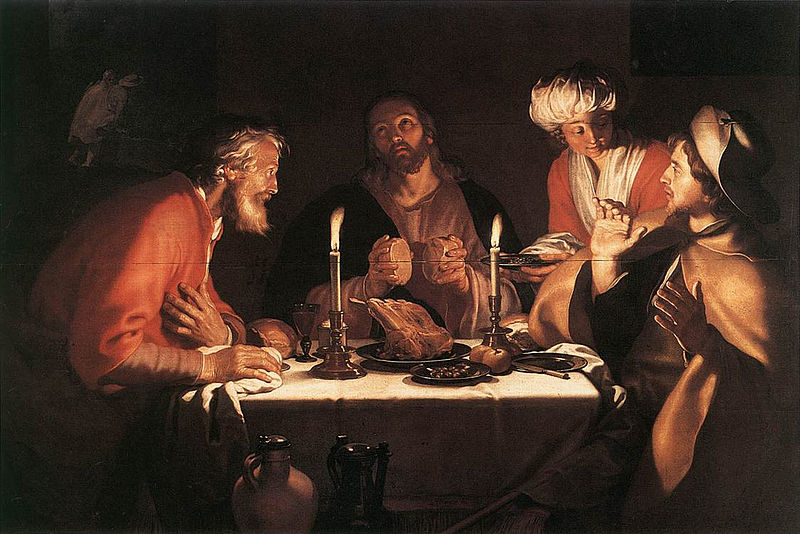
Extraordinary things can happen if we open ourselves to the presence of a stranger or “foreigner” on the road of life. That seems to be a key element in today’s gospel passage from the well-known and well-loved Emmaus story. Imagine two dejected disciples (Cleopas and possibly his wife) on Easter Day, on the road back from Jerusalem to their home in Emmaus, a few kilometres away. On their journey, they encounter the risen Jesus. At first, they fail to recognise him. Their sadness at his violent death has blinded them to the significance of the women’s account of the empty tomb. It has blinded them to what is happening before their very eyes.
Jesus engages them in conversation and holds up a metaphorical mirror to their experience of loss and grief. Their hearts ‘burn’ within them as he reveals to them the meaning of his death and resurrection in the light of their sacred scriptures. Yet still they fail to recognise the one whom they have described as “a prophet mighty in deed and word.” They invite him to share a meal with them and their eyes are opened: they recognise him in the blessing and breaking of the bread they share with him. He disappears from their midst. They cannot contain the joy they have experienced in realising that Jesus is now alive and once more present to them, but in a new and transforming way.
Cleopas and partner go straight back to Jerusalem to share this good news with the other disciples. Now all the assembled disciples experience powerfully the presence of Jesus in their midst. They too pass over the women’s story; the appearance of the risen Jesus to Peter is the ground of their new faith. As the story continues beyond today’s reading, we learn that they too will share a meal with him and he will open their minds to understand the scriptures. Everything will fall into place. The fear that has paralysed them will fall away. They will not only understand Jesus’ death and resurrection in the light of the scriptures. They will be ‘clothed with power from on high’ to exercise their role as witnesses to this great mystery.
Extraordinary things can happen to those who are hospitable enough to “break bread” with “foreigners” in whom they do not immediately recognise God’s presence. If we open our hearts and our homes to those who seek a welcome on our shores, we might come to participate a little more deeply in the joy of the resurrection.
CATHOLIC STEWARDSHIP – EMMAUS
CATHOLIC STEWARDSHIP FROM SUNDAYS READINGS
“Were not our hearts burning within us while He spoke to us?” Jesus appeared five times to people on the day of His Resurrection. This was most likely the fourth appearance, as these two disciples walked the seven mile distance to Emmaus. The conversation of the men indicates that they were aware of the reports from others that the Lord had risen and had been seen. Yet they seemed to be uncertain. It is difficult to imagine their excitement recognizing Jesus, but an indication of that is the fact that even though they have just made the walk to Emmaus, they turn and go back to Jerusalem, we assume with great haste.
The first reading from Acts shows us a very different Peter than the one we have known. Having received the Holy Spirit and having personally witnessed Christ’s Resurrection, Peter is a man on fire with faith. He speaks with confidence and authority, and although the rest of the Apostles are there, he has clearly become the spokesman.
What St. Peter urges us to do is to have that same fire, that same commitment, so that our hearts can be burning within us with the knowledge of our salvation. Peter tells us to “Listen to my words” and “Hear my words.” We could add to that “Understand my words,” as we seek to live out our discipleship, our stewardship as followers of Christ.
Copyright © 2014 www.TheCatholicSteward.com
REFLECTION ON TODAYS READINGS – SISTER VERONICA LAWSON rsm
Reflection on the Gospel-Easter 2A, 27 April 2014 (John 20:19-31)
Not so long ago we used to speak of the Sundays ‘after’ Easter. The terminology has changed and we now speak of the Sundays ‘of’ Easter. In other words, we now recognise that the liturgical readings and prayers for each Sunday between Easter and Pentecost invite us into different movements of the one great symphony of resurrection faith.
The first scene in today’s gospel has the disciples hiding behind closed doors ‘for fear’ of those who had handed Jesus over to be executed by the Roman authorities. As supporters of someone executed on a political charge, they had reason to be fearful. Jesus appears among them, offers a greeting of peace, and tells them that he has been sent by God, his ‘Father’. They receive from him the gift of the Holy Spirit. He sends them in turn to bring peace and to mediate the forgiveness of God through the power of the Spirit. The story invites us as believers to place ourselves in the shoes of the earliest disciples. It invites us to receive the gift of the Spirit, to emerge from behind the doors that close us in on ourselves and that prevent us from rising above the fear of reprisals in the pursuit of justice and peace.
The second and third scenes in today’s gospel focus on Thomas who was not with the other disciples when Jesus first appeared in their midst. Thomas seems to trust only his own first hand experience. We all know people like Thomas. They test our patience because they seem to lack imagination. Then they make big statements when they come around to understanding what everyone else has known for a while. If we think, however, that those who hear in the first place are any better than Thomas, we need to note that the doors are still closed eight days later! The simple fact of knowing has not dispelled the fears. Even those who do believe and trust often need time to take the gospel message on board.
While Christians continue to celebrate Easter, our Jewish sisters and brothers have been marking Yom HaShoah, Holocaust Remembrance Day (April 27-28). We might join our prayers with theirs for the many who died at the hands of those who allowed their racial fears and prejudices to take unimaginable directions. We might also pray for the courage to challenge all forms of discrimination and shameful brutality in our own times and the strength to open our hearts and our homland, without fear, to those who seek refuge among us.
EASTER TRIDUUM-THANK YOU ALL
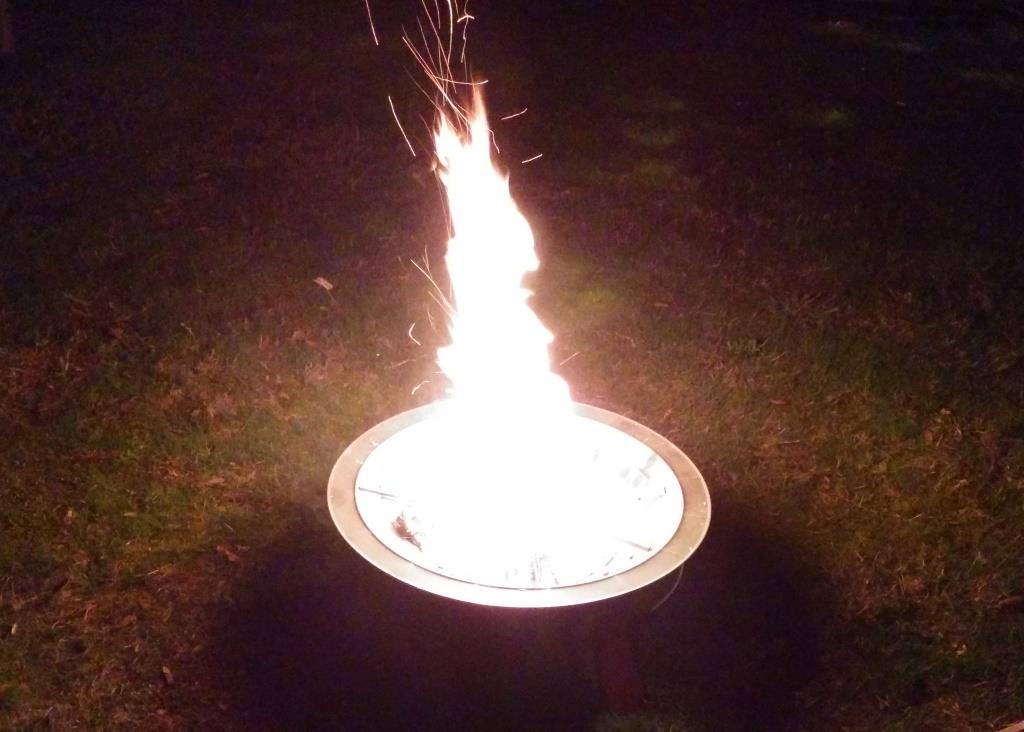
We thank those who prepared the liturgies which helped us towards reverent and meaningful Easter celebrations.
Our sincere thanks to Fr Bert who without hesitation readily led us in all the ceremonies. Thank you to all the community who fully and actively participated in these ceremonies.
FR KEVIN IS STILL IN HOSPITAL. WE WILL CONTINUE TO PRAY FOR A SPEEDY RECOVERY
EASTER IN OUR PARISH

O God, who on this day,
through your only Begotten Son,
have conquered death
and unlocked for us the path to eternity,
grant, we pray, that we who keep
the solemnity of the Lord’s Resurrection
may, through the renewal brought by your Spirit,
rise up in the light of life.
Through our Lord Jesus Christ, Your Son,
who lives and reigns with you in the unity of the Holy Spirit,
one God, for ever and ever.
the Collect of Easter Sunday
NOTICES —— Mainly meetings and promises of meetings

MEETING FOR MINISTERS OF THE SICK AND HOUSEBOUND:
Sunday 27 April, 9.30am (between Masses) or Friday 9 May, 9.45am (after Mass)
MINISTERS OF COMMUNION:
Formation for all Ministers of Communion will be held on Wednesday 30 April at 10.00am or 7.30pm in the Parish Centre.
PARISH GROUPS:
All parish group contacts have recently been sent a letter regarding the Parish Meeting Night initiative. All members and / or representatives are warmly welcome (as noted in the letter) to a gathering on May 6 at 7.30pm at the Parish Centre. Any enquiries please call the Parish Office 9744 1060.
ST ANNE’S CHURCH CLOSURE:
St Anne’s Church will be closed from Monday April 28 to Saturday May 3 for cleaning, maintenance and the installation of the Tapestries. Scaffolding will allow cleaning of the high areas in the apse.
Saturday evening Mass will be at the usual time of 6.00pm on May 3.
“PASCHAL MYSTERY”- TAPESTRIES:
Tapestries will be blessed at the 8.30am Mass on Sunday May 4. Morning Tea after will be hosted by Sunbury West Neighbourhood.
ANZAC DAY SERVICE
 Anzac Day will begin with Mass at OLMC at 9.00am followed by the march in Sunbury at 10.00am concluding with the Prayer Service led by the Anglican Vicar and Catholic Priest. The wreaths will be laid within the Prayer Service at the War Memorial.
THANKS TO OUR LITURGY PLANNERS, MUSICIANS AND CHURCH CLEANERS
Three months ago we began planning for Lent and Easter, meeting on two evenings for a total of four hours.
Every week, our team of volunteers cleans our two churches. Each Sunday, our musicians lead us in prayerful music.
ANNUAL PRIESTS MASS
The Annual Priests Mass was celebrated last Tuesday by 240 Melbourne priests active and retired, ministering in parishes, colleges, hospitals and prisons. During Mass we renewed our vows of priestly commitment and the Oils for the Sacraments of Baptism, Confirmation and Anointing of the Sick were blessed. Then we had lunch together.
ST ANNE’S CHURCH CLOSURE
St Anne’s Church will be closed from Monday April 28 to Saturday May 3 for cleaning, maintenance and the installation of the Tapestries.
Scaffolding will allow cleaning of the high areas in the apse.
Saturday evening Mass will be at the usual time of 6.00pm on May 3.
EASTER TIMETABLE

MASS TIMES
EASTER TIMETABLE
| WEDNESDAY 9TH APRIL |
||
| Lent Reconciliation | 7.30pm | St Anne’s Church |
| SATURDAY 12TH APRIL |
||
| Palm Sunday | 6.0pm | St Anne’s Church |
| SUNDAY 13TH APRIL |
||
| Palm Sunday | 8.30am | St Anne’s Church |
| Palm Sunday | 10.30am | St Anne’s Church |
| Palm Sunday | 5.30pm | Our Lady of Mount Carmel Church |
| THURSDAY 17TH APRIL |
||
| Holy Thursday | 7.30pm | St Anne’s Church |
| FRIDAY 18TH APRIL |
||
| Way of the Cross | 9.00am | Our Lady of Mount Carmel Church |
| Inter church Service | 10.00am | Memorial Hall, Sunbury |
| Passion of our Lord | 3.00pm | St Anne’s Church |
| SATURDAY 19TH APRIL |
||
| Lent Reconciliation | 10.00am | Our Lady of Mount Carmel Church |
| Easter Vigil | 7.30pm | St Anne’s Church |
| SUNDAY 20TH APRIL |
||
| NORMAL SUNDAY MASS TIMES | ||
REFLECTION ON TODAYS READINGS – SISTER VERONICA LAWSON rsm
Reflection on the Gospel-Easter Sunday Year A, 20 April 2014 (Matthew 28:1-10)
After death, Jesus is cared for by a faith-filled man in the presence of two faith-filled women. These three people are fearless in the face of possible reprisals for their support of a “political criminal”. Joseph, who comes from Arimathea, a little village just north of Jerusalem, cares for Jesus out of his personal wealth, providing a clean linen cloth and his own newly rock-carved tomb. With his own hands, he performs the burial ritual, lays Jesus’ body in the tomb, and rolls the stone into place. The women disciples who witness the closing of the tomb are both named Mary. One is from Magdala, centre of a fish-salting industry by the Sea of Galilee, and the other is the mother of two male disciples. These women have contributed their goods and services to Jesus over the long journey from Galilee to Jerusalem.
The two women set out at dawn ‘to see the tomb’. This seems a little strange until we realise that they are once again functioning as witnesses, this time to the dramatic opening of the tomb and the appearance of God’s interpretive messenger. ‘Seeing’ becomes a metaphor for insight. In the earthquake phenomenon and the allusion to lightning, there are echoes of other great moments of God’s appearing to Israel, such as the encounter with Moses and the giving of the Law on Mt Sinai.
The two Marys are the first to learn the news of Jesus’ resurrection. They are also the first to be commissioned to proclaim it. The women ‘see’ the place where he was laid. They obey the angel’s command not to be afraid but to go quickly to the scattered disciples and inform them that the risen Jesus has gone before them to Galilee, the place of mission, where they too will ‘see’ him. Resurrection life energises these faith-filled women disciples/apostles and negates the death-dealing power of the Roman Empire. Ironically, the Roman tomb guards become ‘as though dead’.
As the women hurry away from the tomb, Jesus comes to meet them. He addresses them with the familiar greeting, ‘Chairete’, a greeting of joy. This is the first appearance of the risen Jesus and it draws from the women a profoundly reverential response: taking hold of him, they fall down in worship, an action foreshadowed by the courageous but doubly marginalised Canaanite woman (15:25). Jesus reiterates the commission already delivered by the angel: not to be afraid and to let the men know what has happened. These same men will later be commissioned on the mountain top (Matt 28:16-20). Often, the temptation is to stay on the mountain, instead of recognising the appearances of the Risen One on the open road of life and getting on with the mission.
PROJECT COMPASSION 2014 – PLEASE RETURN ANY MONIES COLLECTED

Please arrange for Project Compassion boxes to be returned at your earliest convenience so money can be forwarded to Caritas Australia. Thank you for your generous support of this charity.


You must be logged in to post a comment.