BISHOP TIM COSTELLOE APPOINTED ARCHBISHOP OF PERTH

Pope Benedict has appointed Melbourne auxiliary bishop Tim Costelloe the new Archbishop of Perth, reports The Age.
The Melbourne-born member of the Salesian order, who has been a bishop fewer than five years, replaces Archbishop Barry Hickey as one of Australia’s seven archbishops.
Archbishop-elect Costelloe, 58, who was ordained in Melbourne in 1986, is also an adjunct professor at the Australian Catholic University and serves on two Australian Catholic Bishops Conference committees – education, and doctrine and morals. He spent four years in Perth in the 1990s.
In a statement, Archbishop Philip Wilson called the appointment good news not only for the people of Perth, but for the Church in Australia. “Bishop Timothy Costelloe is a gifted, highly intelligent pastor who has shown consistent leadership in Melbourne where he has been an Auxiliary Bishop over the past five years”, he said.
“He is a very insightful person who has an excellent pastoral manner and a keen intellect”, he said.
In response to his appointment, Archbishop-elect Costelloe said he admires the
“commitment and strong sense of solidarity among the clergy of the Archdiocese” in Perth.
“I hope that I will be able to foster this spirit of mutual respect and cooperation in my new role as archbishop. I came, too, to value the vibrancy of the faith of the Catholic people of the Archdiocese. We are a very multi-cultural society and, consequently, a very multi-cultural Church. This is a source of strength and hope for us all.”

PROJECT COMPASSION SUNDAY

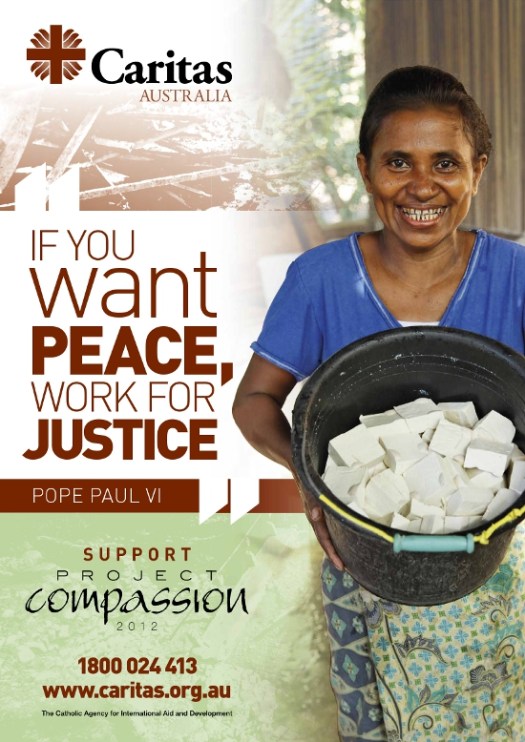
Your donations  to Caritas  Australia’s  Project  Compassion give expression to the Gospel which is imperative to pursue justice and help those suffering from  poverty and disadvantage.  Please take home a Project Compassion box and a set of Lenten envelopes and give generously to the appeal this Lent. Your donations allow Caritas Australia, the Catholic Agency for International Aid and Development, to alleviate poverty and bring hope and justice to disadvantaged communities throughout the world.

MORNING TEA

Morning tea will be co-hosted today by the Youth Group and the Parish and School Leaders. All are welcome to share a cuppa.

ROSARY

The  Rosary is prayed every Saturday morning at 9am in St Anne’s Church. All Welcome.

PARISH COMMISSIONING OF PARISH AND SCHOOL LEADERS

This Sunday at 10.30am Mass, teachers, staff, catechists and pastoral associates, together with student leaders will be commissioned in the important mission of bearing witness to the Gospel as they continue their work in 2012. Today’s ceremony focuses on 50th Anniversary of Vatican II.

HELP WANTED

We are in need of the skills of someone who knows how to repair our beautiful but damaged Nativity scene. Our maintenance team are in the process of fixing our beautiful statues, but needs help from someone who knows how to mould fibreglass or plaster. Nurses repairing broken limbs may be able to assist. If you have the necessary skills, please contact Jo Wiegerink on 9744 5788. If these beautiful statues cannot be repaired, we will need to look at replacing them which will be quite costly.

“MARY MACKILLOP WALKS FOR YOUNG ADULTS” – SAT 25TH FEBRUARY

MacKillop Young Adult Community (MacYAC) invites young adults to come & visit significant sites in the life of our first Australian saint here in Melbourne. Meet at St. Francis Church, Cnr. Elizabeth & Lonsdale Streets, Melbourne at 2pm on Saturday, 25th February- visit the birthsite, Mary MacKillop Heritage Centre and the site of the First Providence.
Come and be inspired by the person of St Mary of the Cross MacKillop – Australia’s First Saint in her home town.
If you can’t make it this month, the walks are held on the fourth Saturday of each month.
For bookings phone:  9926 9300 or macyac@sosj.org.au
MacKillop Young Adult Community (MacYAC) – a ministry of the Sisters of St Joseph of the Sacred Heart of the Victorian Province.

JOSEPHITE ASSOCIATES

The enrolment of three new Associates will take place at the 10.30am Mass on Sunday 26 February. All Associates are invited to welcome the new members. Lunch will follow at the Sunbury Bowling Club from 12 onwards. Please contact Jenny Coutts on 9744 3472 to advise numbers for table bookings. Family members and parishioners are welcome to join us.

VOCATION VIEW

In today’s Gospel, people have difficulty believing that Jesus can forgive sins. Is God asking you to forgive the sins of His people as His ordained priest? Are you called to bring Good News to the poor? Say “yes” to God’s call.

STEWARDSHIP……A WAY OF LIFE

Jesus heals the paralytic man

CATHOLIC STEWARDSHIP FROM SUNDAYS READING

God is merciful. He came to Earth in order to suffer and die and then rise from the dead so that we, the sinners whom He loves, could have eternal life. He came because He loves us so much that He desired to take the punishment of our sins upon Himself.

In today’s gospel, Jesus shows his mercy to a suffering paralytic. He forgives him of his sins – healing him spiritually and then healing his physical ailments. The spiritual healing was, by far, the most important, even though it was only after the physical healing that the people recognized Jesus’ power.

Christ offers us his merciful healing and His life of grace in the sacraments. In a particular way, Jesus forgives us of our sins in the sacrament of reconciliation. He is there for us. He pours his mercy upon us, but, like the paralytic, we have to humbly come to Him. We have to be open to receiving that spiritual healing and that new life of grace.

When we do open ourselves to God’s grace and regularly receive the sacraments, He changes our lives. He makes us stronger disciples and equips us to live a life of faith here and now. He draws us ever nearer to Him and helps others to do the same so that, one day, we will all rejoice with Him in the eternal glory of the heavenly kingdom.


Copyright © 2011 www.TheCatholicSteward.com

THE YEAR OF GRACE IN TODAYS READINGS

Reflection on the Gospel-1st Sunday of Lent Year C
Veronica M. Lawson RSM

(Luke 4:1-11)

Lent is a time for personal as well as group reflection, a time for entering into the ‘wilderness’ or ‘deserted place’ and grappling with the mysteries of life. While deserts are often depicted as uninhabited or desolate regions, anyone who has spent time in such places knows that the desert supports a rich diversity of other-than-human life. Human retreat to the wilderness can be an opportunity to encounter God in the unfamiliar and self in relation to the other-than human.  It can reveal to us our capacities for right relationship with God, with each other, and with the Earth. Right relationship resides in ‘power-with’ rather than ‘power-over’.

In Israel’s story, the wilderness is the place of testing for God’s people: ‘Remember the long way that your God has led you these forty years in the wilderness… testing you to know what was in your heart’ (Deut 8:2). Jesus is ‘filled with the Holy Spirit’ and, like so many human beings before and since, is ‘led by the Spirit’ into the wilderness to be ‘tested’ there. [‘Tested’ is a more accurate translation of the Greek peirazein than the usual ‘tempted].

The three-fold testing of Jesus in the wilderness is about the proper exercise of power and about trust in a loving God. In refusing to turn the stones of the wilderness into bread in order to satisfy his own hunger, Jesus demonstrates that he is not prepared to exercise power over the other-than-human Earth, even if he had the capacity to work such magic. By refusing to accept the ‘glory of all the kingdoms of the world’, he shows that power over the human communities of the Earth is not ‘of God’, and that worship belongs to God alone. Finally, in refusing to cast himself from the parapet of Israel’s holiest shrine, the Jerusalem Temple, he makes it clear that he is not prepared to test the power of God to rescue him from a self-inflicted death or to use God’s holy place to such ends. The Lukan Jesus passes the tests that the people Israel failed in the wilderness of Sinai.

Adelaide priest, Michael Trainor, in a wonderfully sensitive reading of Luke’s gospel, detects three ecological ethical principles in today’s gospel reading: 1) Earth is to be cared for and treated respectfully, not ravaged through greed; 2) All ecological and environmental engagement is grounded in and enhanced by one’s communion with God; and 3) Earth’s resources are to be respected by all and not usurped as a means of power and control by one over another. These principles derive from the story as a whole with its three-fold testing and from Jesus’ three-fold response to the tests

COMMUNION IN THE HAND

Liturgy Lines

(Liturgy Lines are short 500-word essays on liturgical topics written by Elizabeth Harrington, The Liturgical Commission’s education officer. They have been published every week in The Catholic Leader [Brisbane] since 1999. They may be reproduced by parishes for private non-commercial use, provided that the copyright line is retaineDate – 12/02/2012

Communion in the Hand

Last week a priest emailed me this question: “Many conservative young people are telling me that the pope now wants people to receive communion on the tongue only – did I miss something with the new translation?”

I had only just emailed my reply (below), when I read about two Australian priests conducting an online petition calling on Pope Benedict to eliminate receiving the Eucharist in the hand because it “inflicts great spiritual harm on the Catholic faithful”.

This push for receiving communion on the tongue has nothing to do with the implementation of the revised Roman Missal, which involves a change in wording only. The “General Instruction of the Roman Missal” # 161 makes it quite clear that the choice of how to receive communion is the communicant’s. No minister may dictate whether communicants receive in the hand or on the tongue.

Receiving communion on the tongue when the majority receive in the hand disrupts the unity that uniformity of posture and practice at Communion symbolises and builds. It is awkward for ministers to give communion on the tongue to people who are standing, which is the recommended posture for communion in Australia, and it is unhygienic because it is difficult for ministers to avoid passing saliva on to other communicants.

Historical accounts make it quite clear that communion was received in the hand in the early Church.  In the middle of the fourth century Bishop Cyril of Jerusalem gave this instruction to those who were about to join the church: “When you come forward for communion, do not draw near with your hands wide open or with fingers spread apart; instead, with you left hand make a throne for the right hand, which will receive the King.  Receive the body of Christ in the hollow of your hand and give the response: Amen.”  It was only later that over-emphasis on Christ’s divinity and on human sinfulness led to a ban on people receiving communion in the hand. In fact, people seldom received communion at all.

We now understand that Christ is present in several special ways at Mass apart from in the consecrated elements, for example in the assembly which gathers. We “touch” Christ in these other manifestations, so it would be inconsistent not to be able to take Christ under the form of bread in our hands. The bread which becomes the body of Christ is described in the liturgical texts as “work of human hands”. There is nothing unworthy about our hands. After all, we use them to do Christ’s work. As St Teresa said, “Christ has no other hands but yours”.

If, as claimed, “a disturbing number” of communicants do not know how to receive Communion reverently, the best response is to provide formation about the meaning of this sacred action and the appropriate way to participate in it.

The proponents of the petition cite rumours of people taking consecrated hosts to use at “Black Masses” or of visitors at big events at the Vatican slipping consecrated hosts into wallets to keep as souvenirs. It hardly seems appropriate, however, to make rules for the universal Church based on unsubstantiated stories of aberrant behaviour by a few individuals.

copyright: The Liturgical Commission

STEWARDSHIP……A WAY OF LIFE

CATHOLIC STEWARDSHIP FROM SUNDAYS READING

ICON OF SAINT PAUL

“Do everything for the glory of God,” Paul tells the Corinthians in today’s second reading.

Indeed, we are all charged with that same task. As Christian disciples, we are called to live in such a way that all we do and say gives glory to the Lord. We recognize that He is the one who has given us the many good gifts we enjoy – our time, our talents, and our treasure. Even our very lives come by way of gift from God, and it is our duty as His disciples to use the many gifts He has given us in such a way that we bear witness to Him.

It is not an easy task, particularly in the world in which we live. We are surrounded by so much relativistic thinking, and engulfed in a culture of selfishness. The secular society tells us that what “I” want to do and when “I” want to do it is all that matters. Yet, we know that there is so much beyond our “here and now” life on Earth. There is so much beyond the “feel-good” mentality of our culture. We are here to know, love, and to serve God, and when we do so, all who come in contact with us will see Christ.

It is a difficult task to be in the world but not of it, and to live for one person and one person only: the Lord. But we know that, when we do, we are richly rewarded. The life of a Christian disciple isn’t an easy one. In fact, just as the Corinthians to whom Paul writes this letter, we are sure to confront constant opposition, but when we live for Christ, giving Him glory in all we do – at home, at work, at school, and elsewhere, we are richly blessed.

Copyright © 2011 www.TheCatholicSteward.com

ANNIVERSARY OF NATIONAL APOLOGY DAY

Monday 13 February 2012 marks the first anniversary of a significant moment in the history of Australia. The Aboriginal Catholic Ministry remember the apology from former Australian Prime Minister, Kevin Rudd, who apologised to the Aboriginal people for the “Children of the Stolen Generation”- a very sad part of our Australian History. We remember this day, and pray that as we move forward as a nation, that we learn from the mistakes of our past and remember the dignity of all families and all people.

WELCOMING A CANDIDATE

On Sunday 12 February 2012 at 8.30 Mass,  we shall  welcome Christine into our parish community. Christine who is a baptized Catholic, embarked on her RCIA faith journey in July 2011 and through the Rite of Acceptance on 12 February, will enter the Catechumenate and continue to learn about Jesus and the teachings of His church. Please keep Christine in our prayers as she continues to journey towards the sacraments on Initiation at Easter.
…. R.C.I.A. Team

FUNERAL OF FR PETER FULTON

Last Wednesday, 600 people took part in his funeral at St James the Apostle, Greensborough North, including five bishops and seventy priests. The singing by all the people was wonderful. His family described the funeral as “Magnificent”.

I thank you for your expressions of sympathy in the loss of my best friend of nearly
50 years. His parents became friends of my parents.
…Fr Kevin McIntosh